Rates
Rate hike, hold or cut? What December 9 means for your money
The Bank of Canada raised its rate to 2.5% in October. Here's what each move would mean.
 By Canada Compares News Desk
We may earn a commission from links on this page. How we make money
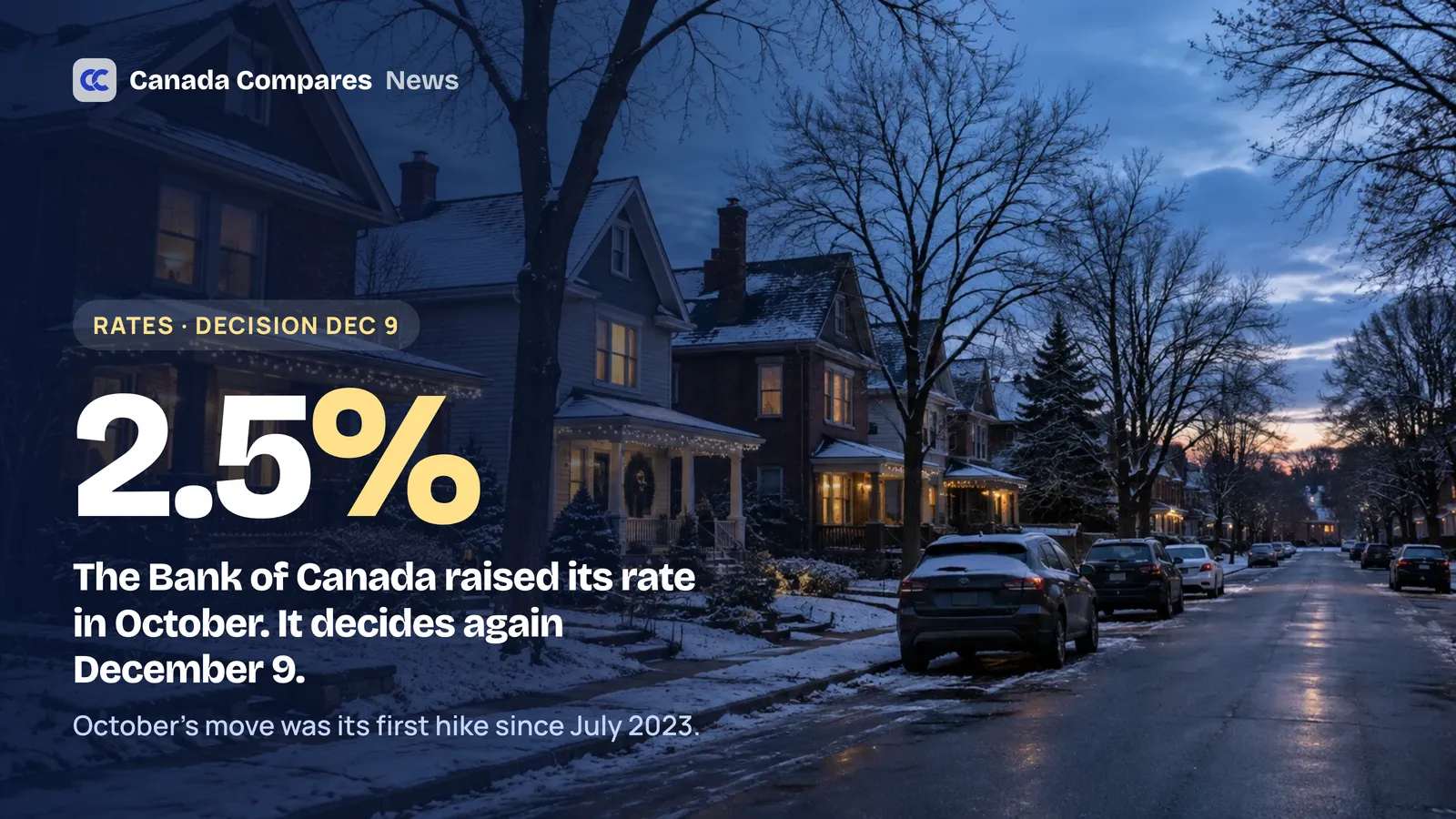
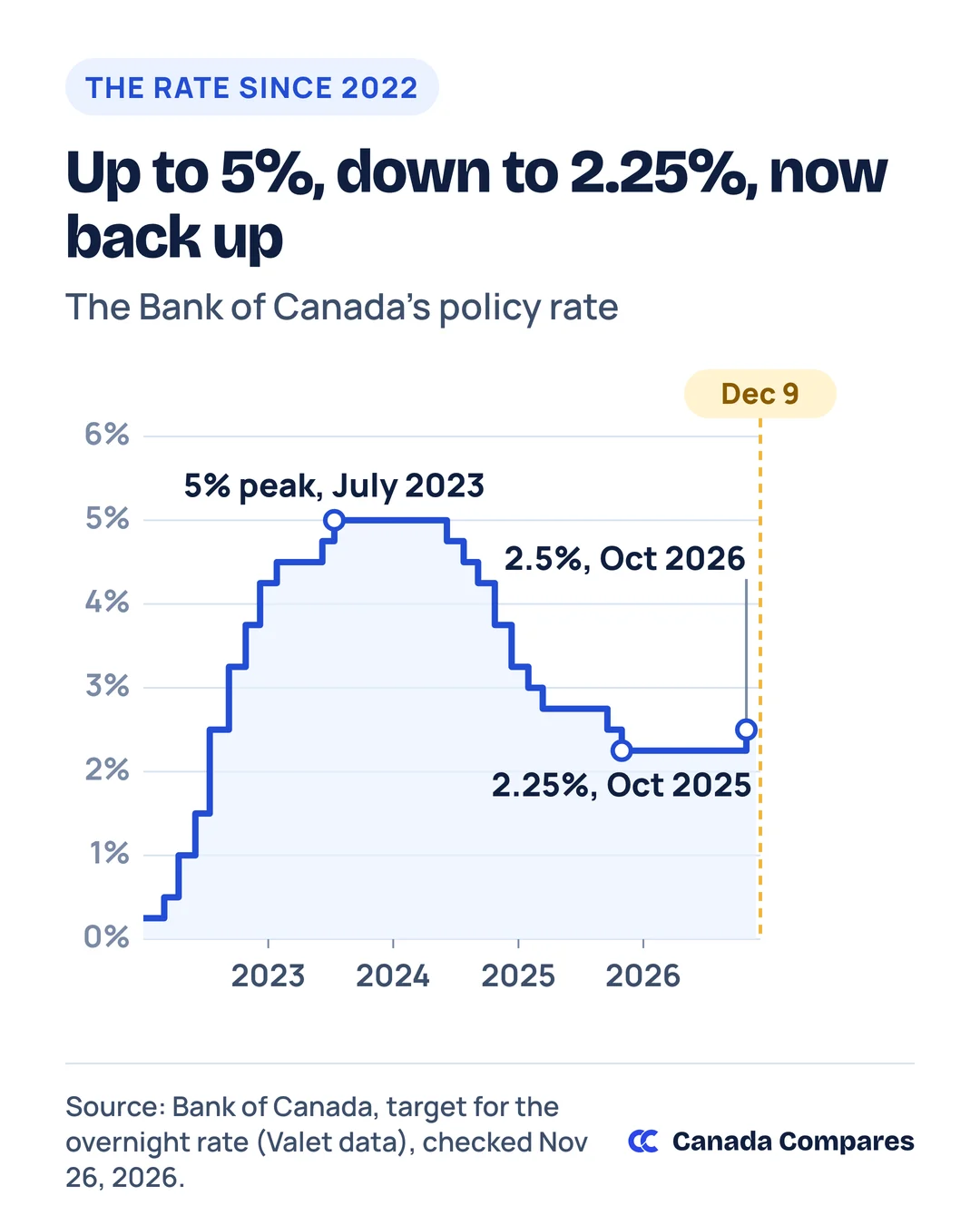
For more than three years, Canada's key interest rate only went down or stayed put. Then on October 28, the Bank of Canada raised it by 0.25 points, to 2.5%. On December 9, it decides again.
Why rates went up
The Bank said prices are rising faster than it wants. Inflation has been around 3% since April. High oil prices are a big part of that. The Bank expects about 3½% by the end of 2026.
It also said there "could be a need to increase the policy rate further." But it said it would "proceed carefully."
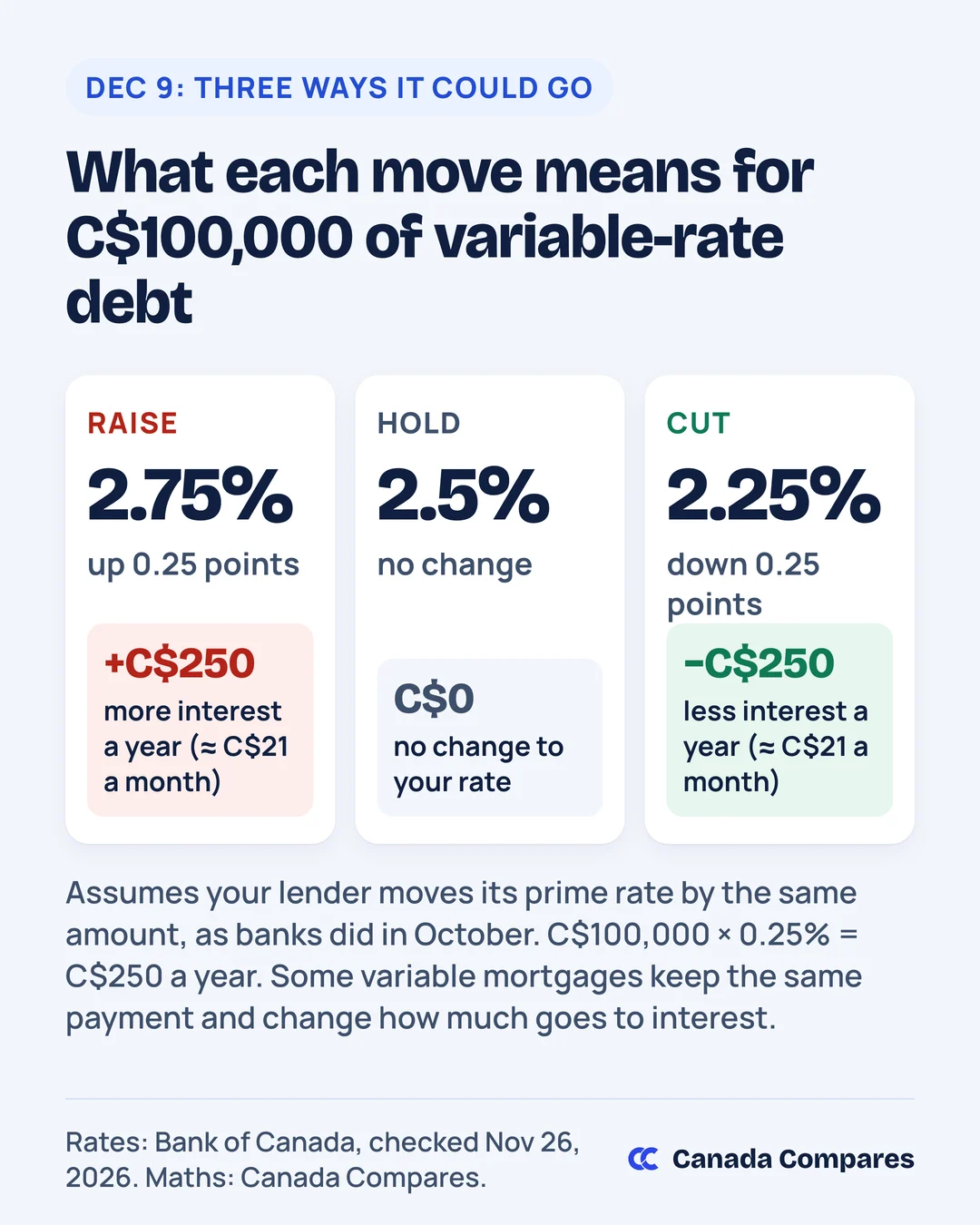
What each move would mean for you
We don't know what the Bank will do. Here's the simple maths for each move.
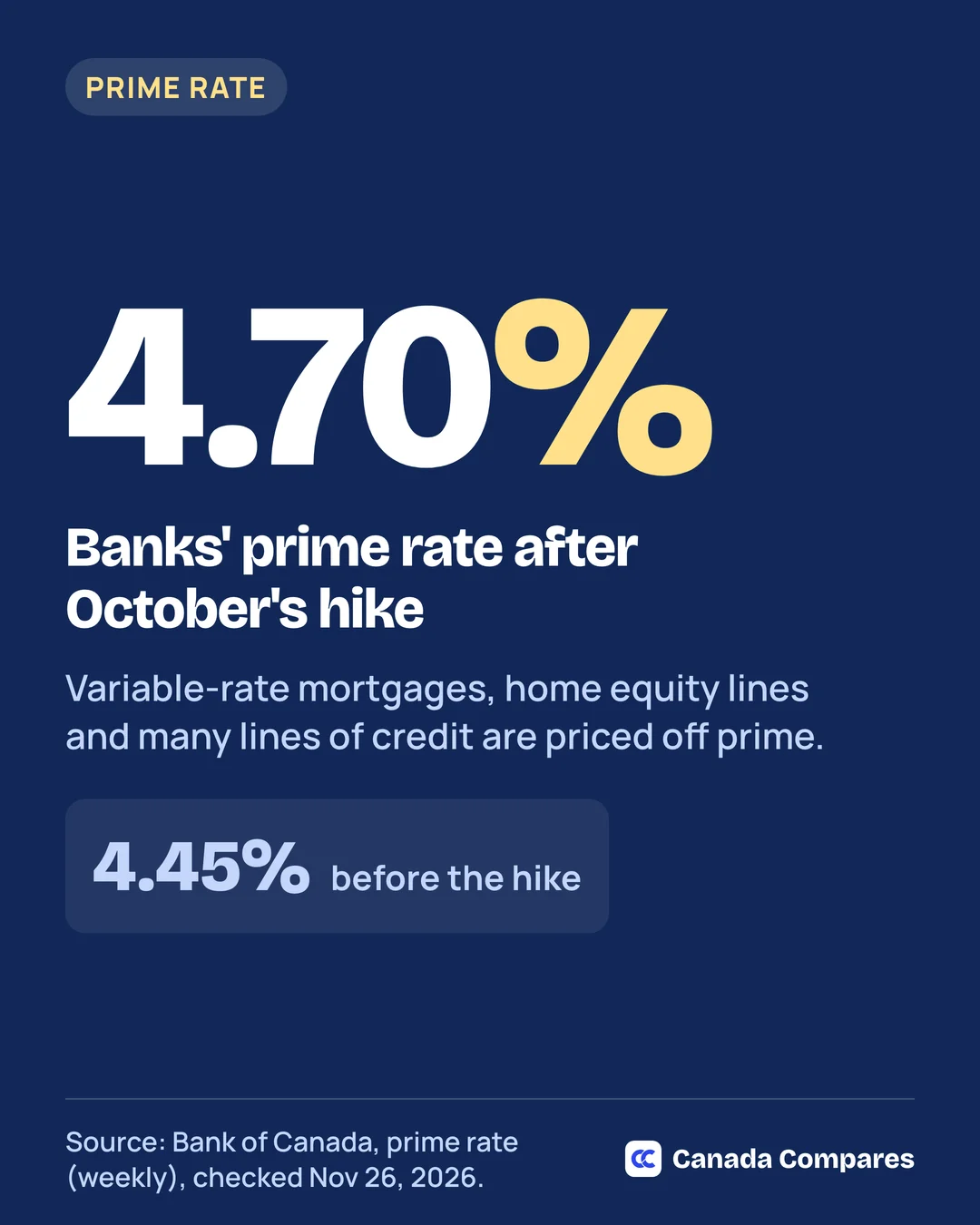
Prime went up too
Banks set their own prime rate. It's the base for most variable-rate mortgages and lines of credit. After the October hike, prime rose from 4.45% to 4.70%.
The Bank sets its rate on 8 dates a year. In 2027, they are January 27, March 3, April 28, June 2, July 21, September 8, October 27 and December 8.
Sources we checked (6)
- Bank of Canada: rate announcement, October 28, 2026 (checked 26 November 2026)
- Bank of Canada: policy interest rate and 2026 schedule (checked 26 November 2026)
- Bank of Canada: upcoming events (checked 26 November 2026)
- Bank of Canada: target for the overnight rate, data (checked 26 November 2026)
- Bank of Canada: prime rate, weekly data (checked 26 November 2026)
- Example maths: C$100,000 × 0.25% = C$250 a year, about C$21 a month.