Government
42 days to repay payday loans: what Canada's budget bill would change
It's not law yet. The bill also changes the workers benefit, disability credit and EI.
 By Canada Compares News Desk
We may earn a commission from links on this page. How we make money
Finance Minister François-Philippe Champagne brought in Bill C-43 on November 26, 2026. It's the first bill to carry out Budget 2026. The budget came out on November 5.
The bill has many parts. Here are the ones that touch your money most.
Payday loans: more time to pay
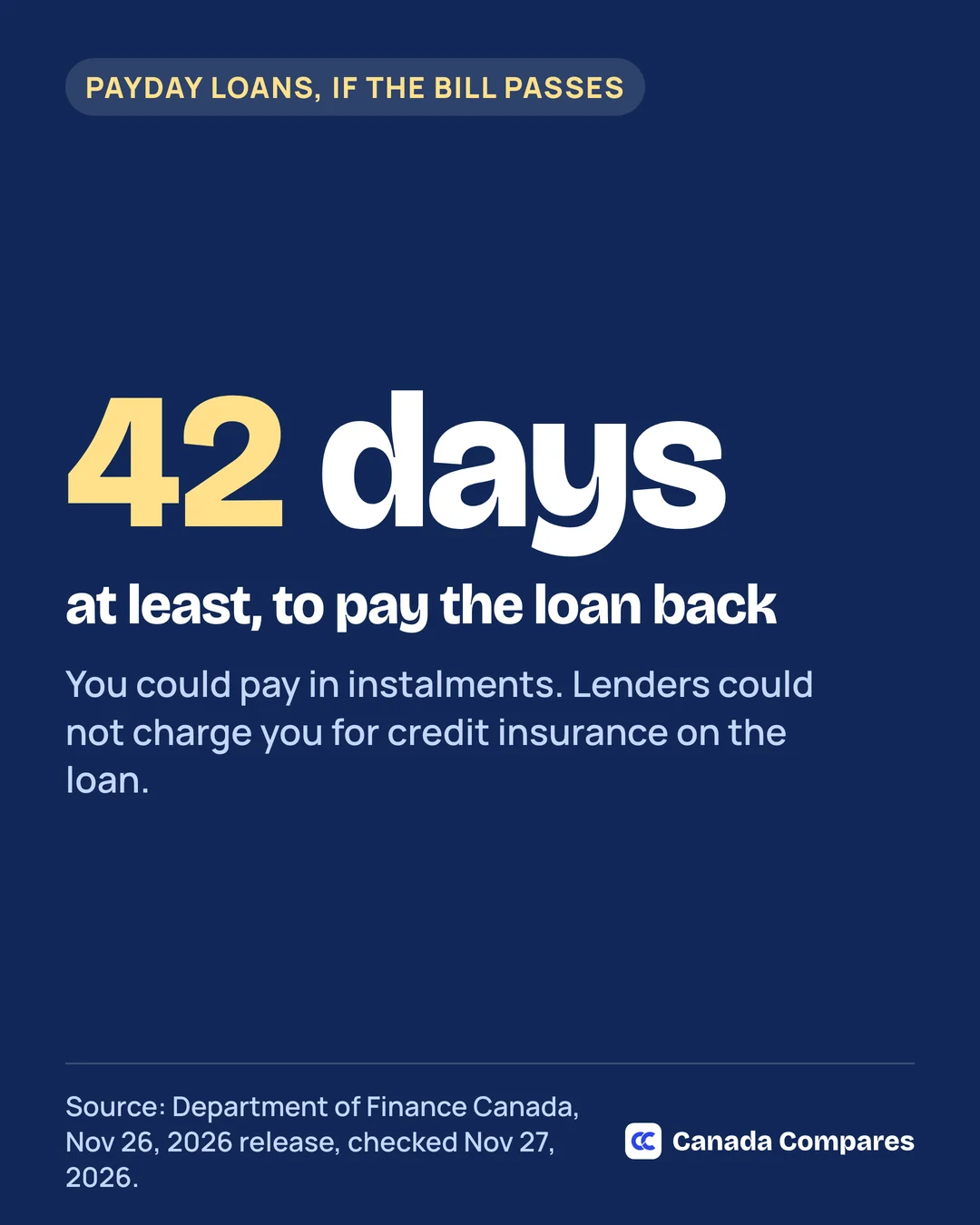
A payday loan is a small, short loan. It often costs a lot. The bill would set a minimum of 42 days to pay one back. You could pay in parts, called instalments.
Lenders also could not charge you for credit insurance tied to the loan.
5 more changes in the bill
- Workers benefit. The Build Canada Workers Benefit would reach more workers. Payments would go up for people with modest pay.
- Disability Tax Credit. Applying would be simpler for some long-lasting conditions. More kinds of medical workers could sign the form.
- RDSP. That's a Registered Disability Savings Plan. Some family members could open one for an adult who can't do it alone. That change would be permanent.
- Tax instalments. Some people pay tax in parts during the year. The bill raises the level where you must do that. The government says this cuts paperwork for nearly 1.1 million people.
- EI for apprentices. Some apprentices would get at least 18 weeks of EI, up from 14. That's for a set time only.
The release gives no dollar amounts for the workers benefit. We'll add them when the government posts them.
What happens next
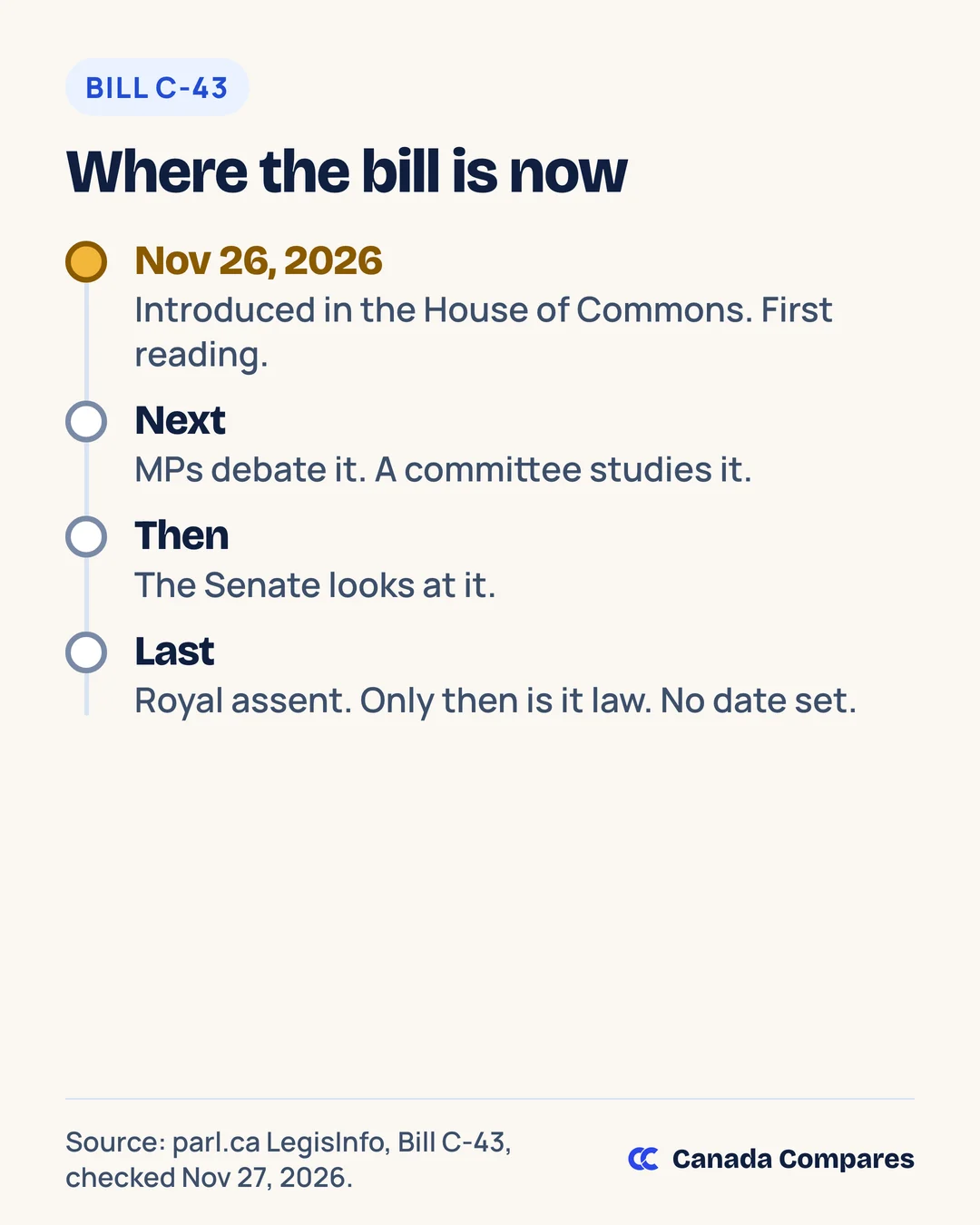
A bill becomes law only after both the House and the Senate pass it. Then it gets royal assent. There's no date for that yet.
Sources we checked (2)
- Department of Finance Canada: Minister introduces legislation to implement Budget 2026 (checked 27 November 2026)
- Parliament of Canada: LegisInfo, Bill C-43 (checked 27 November 2026)